Blue Light Service Veterans

Working together to support dignified living

Homelessness can affect anyone

Currently the UK doesn’t record specific figures on Homeless emergency services personnel, however Leaving Institutions: “Departure from an institution” (which can include military or other services) is a rising cause of homelessness, with 4,510 households reported in the 2024–25 financial year, with the increase being of 26.3% (UK Gov).

The term sofa surfing where individuals stay short term at friends or families homes for one or more nights so they can remain clean and working has never been quantified but it is a reality for some, which we find unacceptable for a person who puts their life on the line daily to be left homeless or without a permanent address. 


Mental Health & Wellbeing

First responders face extraordinary stress daily. Providing dedicated mental health counseling ensures those who protect our communities receive the care they deserve — building resilience, reducing burnout, and strengthening the teams we depend on.
1 in 5 Emergency workers experience PTSD or Complex PTSD symptoms

Blue Light Together – Online wellbeing platform with clinically-backed resources and crisis support

Police Care UK – Evidence-based PTSD treatments and specialist trauma therapy for officers

The Ambulance Staff Charity (TASC) – 3,200+ hours of annual mental health support with 64% PTSD improvement

The Fire Fighters Charity – HOPE wellbeing programme, crisis line, and rehabilitation centres

Squaddie Box (CIC) – Suicide Prevention Week and Stag On which provides Veterans with a safe place to regenerate and engage in some exciting activities at the Blacklands Adventure Centre 

Training Programs for Serving Personnel & Veterans

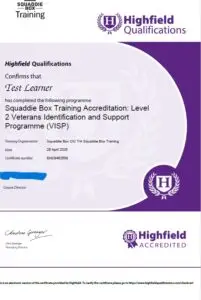
Level 2 Veterans Identification and Support Programme

Is available to anyone who works within a space where there is a need to identify veterans quickly and safely whilst enabling them to provide relevant and dedication support

This programme is designed for learners who need to understand the principles of identifying military veterans through behavioural and situational indicators, without requiring direct disclosure

It covers the identification, understanding and support of military veterans, including their background, behavioural characteristics, trauma-related responses and support needs, with a focus on applying this knowledge in customer service, custody suites, Social Services, NHS environments and related service environments

The Forcer Protocol (often referred to in the context of Claire Lilly’s work) is a UK-wide police initiative designed to rapidly locate and protect serving or ex-service personnel (veterans and reservists) who go missing. It was founded by Claire Lilly, the former wife of Alan Forcer, a war veteran who took his own life in May 2020 after going missing

  • Success Rate: The program has been highly effective, with reports stating that within its initial trials and adoption by various forces (like Greater Manchester Police), over 170 veterans were safely located.
  • Endorsement: The initiative is backed by the National Police Chiefs’ Council (NPCC) and is being rolled out across UK police forces, with significant support from figures like Ross Kemp